
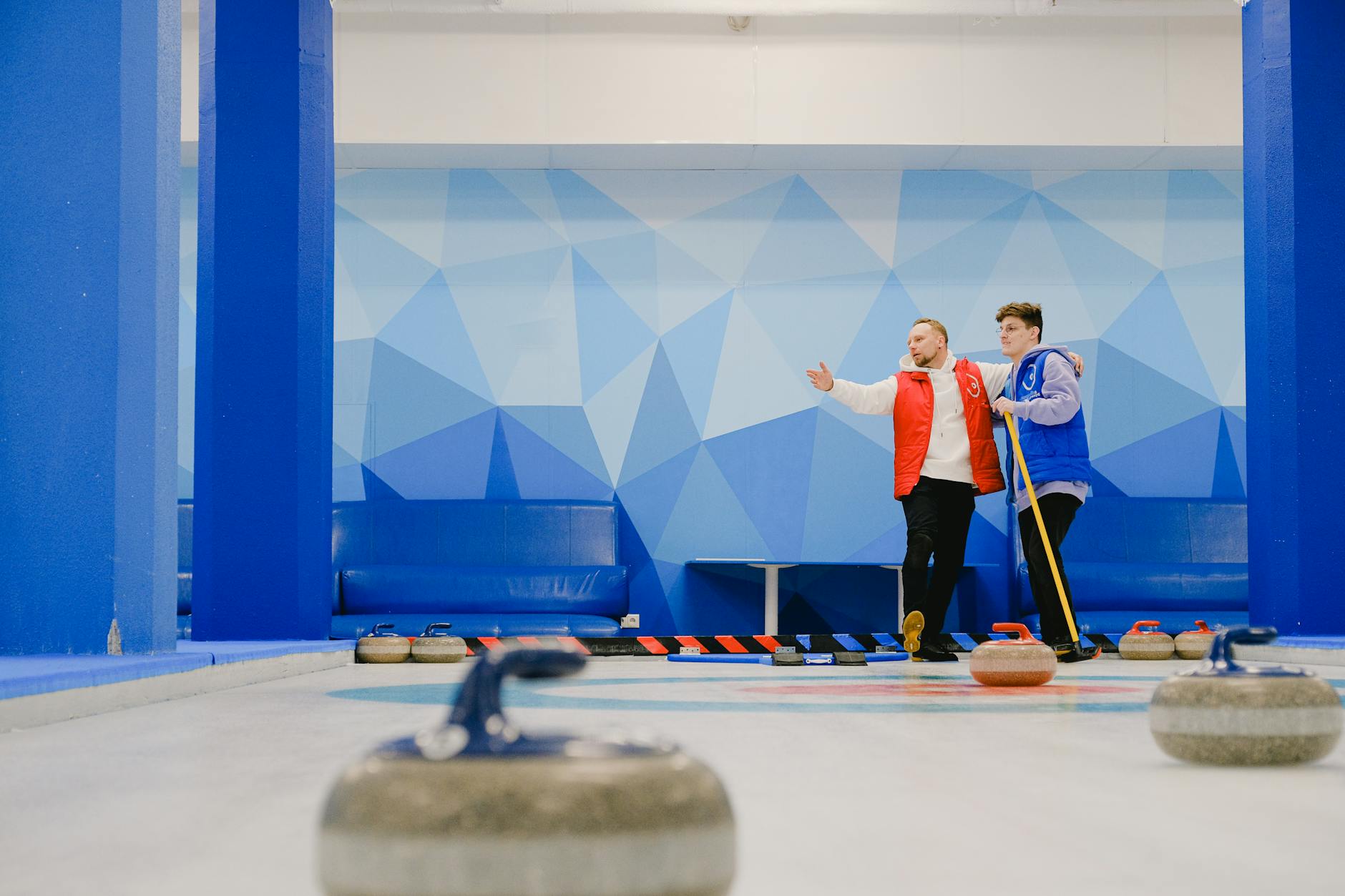
MELBOURNE, 05 February 2026 – As the winter sports season gains momentum across the globe, curling continues to captivate audiences with its unique blend of precision, strategy, and teamwork. Often referred to as “chess on ice,” the sport has seen a significant rise in participation across Australia, with local clubs expanding their programmes to accommodate a growing interest in this Olympic discipline.
The Fundamentals of Curling
Curling is a sport played on a rectangular sheet of ice, where two teams of four players take turns sliding heavy, polished granite stones toward a circular target known as the “house.” The objective is to accumulate the highest score by ensuring your team’s stones are closer to the centre of the house (the “button”) than the opponent’s stones at the conclusion of each “end.”
A key element of the game is sweeping. Players use specialised brooms to polish the ice in front of a moving stone. This action momentarily melts the ice, reducing friction and allowing the stone to travel further and maintain a straighter path. This tactical layer requires intense physical exertion and constant communication between the “skip” (the team captain) and the sweepers.
Standard Equipment and Specifications
The integrity of curling relies on standardised equipment to ensure fair play across different rinks and international competitions. Below are the standard specifications for the primary components of the game:
| Component | Standard Specification |
|---|---|
| Stone Weight | Between 17.24 kg and 19.96 kg |
| Stone Material | Granite (typically sourced from Ailsa Craig, Scotland) |
| Sheet Length | Approximately 45 to 46 metres |
| House Diameter | 3.66 metres (12 feet) |
| Team Size | 4 players (Lead, Second, Third/Vice-Skip, Skip) |
The Strategic Edge: Why It Matters
Strategy in curling involves more than just aiming for the centre. Teams often use “guards”—stones placed in front of the house—to protect their scoring stones or to make it difficult for the opposition to enter the scoring zone. The “hammer,” or the advantage of delivering the final stone of an end, is a critical tactical element that teams strive to secure through clever play in previous ends.
In Australia, the sport is governed by the Australian Curling Federation, which oversees national championships and helps develop pathways for athletes aiming for the Winter Olympics. Despite the lack of natural frozen lakes, dedicated ice facilities in cities like Melbourne, Sydney, and Brisbane have become hubs for the curling community.
Frequently Asked Questions
Why do curling players sweep the ice?
Sweeping serves two main purposes: it reduces friction to help the stone travel further and it cleans the path of any debris or “frost” that might cause the stone to veer off course. It allows the team to influence the stone’s trajectory after it has been released.
What is the “Skip” in a curling team?
The Skip is the team captain and strategist. They usually deliver the final two stones of an end and stand in the house to direct their teammates on where to aim and when to sweep.
How is scoring determined?
Scoring occurs after all 16 stones (eight per team) have been delivered. A team scores one point for every stone that is inside the house and closer to the button than any of the opponent’s stones. Only one team can score in any given end.
Is curling an Olympic sport?
Yes, curling has been a permanent fixture of the Winter Olympic Games since 1998. It includes Men’s, Women’s, and Mixed Doubles categories.